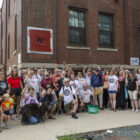
Minnesota Healthcare Workers in Deer River Continue Historic Strike
Around 70 workers with SEIU Healthcare Minnesota & Iowa are staying strong on the picket lines against nonprofit Essentia Health.
Workday Magazine (https://workdayminnesota.flywheelsites.com/category/unions/page/4/)
Around 70 workers with SEIU Healthcare Minnesota & Iowa are staying strong on the picket lines against nonprofit Essentia Health.
After decades of misclassification and one failed union vote in 2017, the Timberwolves and Lynx audio-visual crew won their union—making them the second audio-visual union in Minnesota professional sports.
The professional Minnesota basketball teams’ audio and visual crew are set to vote by mail after union busting and decades of misclassification.
Workers at the local organic food co-op who organized and won union representation are hoping to build a more democratic workplace.
As sugar beet harvesting season comes and goes in the Red River Valley, a labor organizer and leader reflects on worker power in the region.
“Archive in Motion: The ATU Workers of Metro Transit”, a photography exhibition, is on display at the East Side Freedom Library, in St. Paul, Minn. featuring the photographs of Leslie Grant and Jeffrey Skemp of the workers of Metro Transit. The exhibit features film photographs of various transit workers, represented by Amalgamated Transit Union (ATU) Local 1005, honoring the essential work they do and the importance of public transit in bringing people together in a shared public space.
The exhibition includes portraits of the workers while on the job, as well as still-life photographs of objects bus operators carry with them, photos and scans of archival finds and everyday transit ephemera, and the architecture that makes up the transit system—from the mundane yet necessary infrastructure, to the wooded landscapes of the Twin Cities urban parks.
Leslie Grant, a photographer and professor at the Minneapolis College of Art and Design, and Jeffrey Skemp, photographer and poet, began the project on Metro Transit by contacting ATU Local 1005. The union then invited the photographers to join a meeting and present the project to the union members.
The UAW is calling up locals to stand by workers in Belvidere and hold Stellantis to its promises.
Despite the popularity of unions being at a record high, workers in the food service industry face an uphill battle when it comes to fighting for collective bargaining rights. Hospitality unions and workers are trying to change that.
An interview with the author of ‘Blue-Collar Empire,’ a forthcoming book that uncovers the AFL-CIO’s Cold War-era involvement in undermining left-wing and anti-imperialist labor movements abroad.
Descendants Honor 90th Anniversary of Ancestors’ Militant Labor Strike from Unicorn Riot on Vimeo.This video was produced in collaboration with Unicorn Riot and Workday Magazine. On July 27, workers, descendants of the strikers, and the local labor community came together at Wabun Park in Minneapolis to honor the 90th anniversary of the 1934 Truckers’ Strike that brought Minneapolis to a standstill and served as a spark for radical and militant labor struggle across the country.
The strike lasted about three months, as Teamsters Local 574 truckers demanded a fair wage and official recognition of the union. The trucking companies had the support of the Citizens Alliance, an anti-trade union organization that sought to break the strike. The strike’s impact reverberated throughout the city, bringing much of the Minneapolis economy to a halt.
After reaching an agreement, the trucking companies did not honor the terms and workers returned to the streets. On July 20, 1934, the Minneapolis police attacked and opened fire on picketers in the streets of the Warehouse District.